In this guide8 sections
A matrimonio civil comunitario, often called a matrimonio masivo (mass wedding), is the cheapest way to get legally married in Lima: the municipalidad (municipal government) marries dozens of couples in a single ceremony and, in exchange for a fixed date, charges little or nothing. If you’re an expat or a foreigner living in Lima with a partner, it’s worth knowing about, but there’s a catch: there is no citywide calendar. Each municipality decides whether to hold one, when, where and with which requirements, and announces it only a few weeks ahead. This guide explains how it works, what Lima’s districts did in 2026 and how to catch the next one.
The dates, fees and requirements below come from each municipality’s official pages (gob.pe, their own websites and El Peruano, the official gazette), all in Spanish and checked on September 17, 2026. Every figure links to its source. Conditions change from one edition to the next, so confirm with your municipality before you sign up.
What a community civil wedding is
It’s a regular civil marriage: the municipality marries you in front of witnesses, and you’re legally married. The difference is that the ceremony is shared, and the municipality sets the terms for that edition:
- The fee. Usually free or a single flat payment, as the table below shows.
- The date, time and venue, which you don’t choose. They tend to fall on special days: Valentine’s Day, Mother’s Day, the first day of spring (September in Peru) or the district’s anniversary.
- Some steps of the process. San Juan de Miraflores, for instance, waives publication of the marriage notice (edicto matrimonial) for its 2026 community weddings, as long as the couple submits the documents required by article 248 of Peru’s Civil Code (Ordinance No. 580/MDSJM).
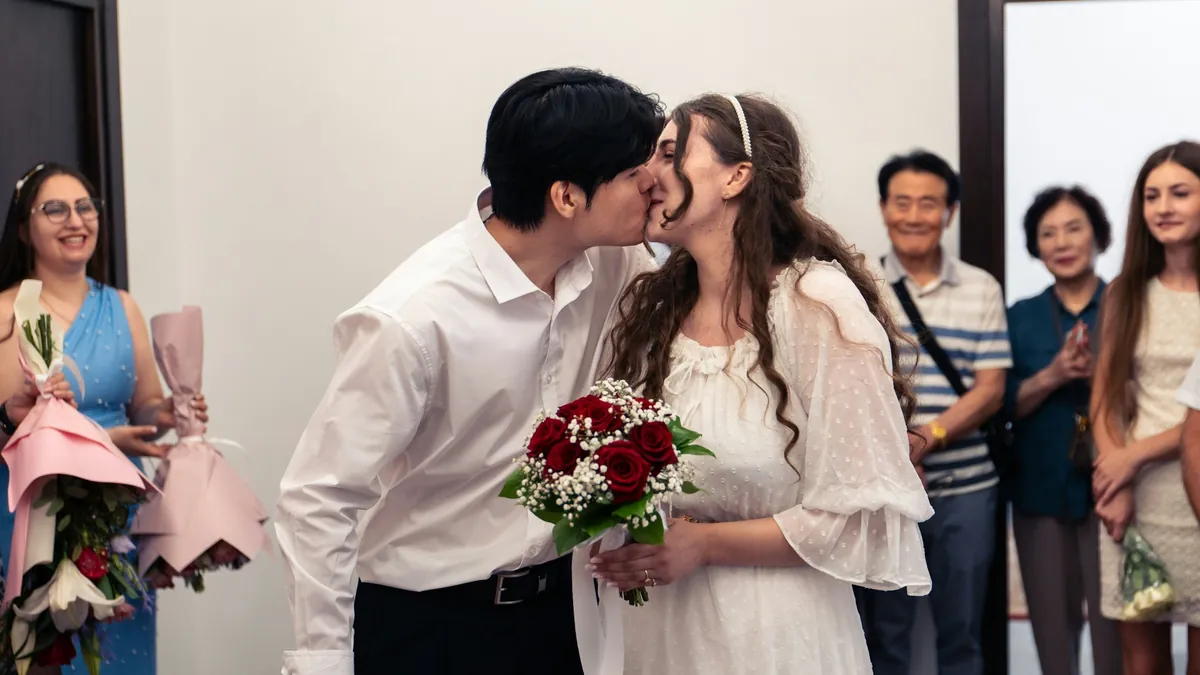
Many municipalities make a party of it. For its February 2026 edition, the Municipalidad de Lima announced cake, a toast, souvenir photos, bouquets for the brides, boutonnieres for the grooms, prize draws and a show (February 6 announcement).
Who runs them, and who can take part
Each municipality runs them for its own residents. The Municipalidad Metropolitana de Lima holds one for couples from Cercado de Lima (the historic center), and each district municipality holds its own. The rule that keeps coming up is that at least one of you must live in the district: San Borja and Ate say so explicitly, and Surco asks for a utility bill showing your address there.
If you live in different districts, either municipality works, so check both. For expats, that’s usually the district where you rent: ask early what proof of address it accepts.
Lima’s community civil weddings in 2026
These are the ones we found announced by official sources:
| Municipality | Date | Fee | Source |
|---|---|---|---|
| Lima (Cercado) | Thursday, February 12 | Free | munlima.gob.pe |
| Ate | Saturday, February 14 | Free | gob.pe |
| Villa El Salvador | Saturday, May 16 | Not stated | gob.pe |
| San Juan de Lurigancho | May | Free | gob.pe |
| San Borja | Saturday, June 20 | Free | gob.pe |
| Santiago de Surco | Saturday, August 15 | S/ 100 | gob.pe |
| San Juan de Miraflores | May and September | S/ 70.00 | El Peruano |
A few details on each:
- Lima (Cercado): 109 couples got married at the Circuito Mágico del Agua, the water-fountain park (February 12 report).
- Ate: 44 couples, for Valentine’s Day.
- San Juan de Lurigancho: 97 couples at Parque Ramón Castilla, known locally as the “love park”.
- San Borja: a special edition for the district’s 43rd anniversary.
- Santiago de Surco: the ceremony was held in the district’s main square, and more than a hundred couples had signed up by August 5.
- San Juan de Miraflores: its ordinance authorizes two editions, in May for Mother’s Day and in September for the first day of spring, and leaves the exact day and venue to a mayoral decree. Don’t confuse it with Miraflores, a different district.
Is there one left this year?
As of September 17, the only upcoming one we found in an official source is San Juan de Miraflores in September, and we couldn’t find the decree setting its day and venue yet. If you live there, ask at its Registro Civil (civil registry office). For the other districts in the table, the 2026 edition has already happened. Lima and Ate both picked Valentine’s week, so it pays to start watching in January.
Requirements: the core repeats, the details vary
There is no single list. Based on what San Borja, Surco and Ate published in 2026, these come up again and again:
- ID for both of you. For Peruvians that’s the DNI (national ID card); Ate also accepted a passport or a carné de extranjería (foreign resident card).
- Birth certificate for each of you. San Borja asked for the original.
- Premarital medical certificate (certificado médico prenupcial). San Borja specified a chest X-ray, a VDRL blood test and proof of attending a talk on sexually transmitted infections.
- Proof of address in the district, like the utility bill Surco asked for.
- Two witnesses with their ID. In San Borja they also had to attend.
- District extras: Surco asked for an ID-size photo of each partner, and Ate required the marriage notice to be published.
If one of you is a foreigner, divorced or widowed, ask before gathering papers: San Borja told couples in those situations to call its civil registry first. At the Municipalidad de Lima, for example, foreign documents must be apostilled (or legalized) and translated into Spanish; our guide to civil wedding requirements in Lima covers the details. Getting papers from abroad takes time, so start early.
If a church wedding is next, the civil certificate or its public notice becomes part of that file: the rest of the Catholic wedding requirements in Peru are gathered in parallel, because church certificates expire after six months.
How to sign up, step by step
- Pick the municipality: the one where you live or the one where your partner lives.
- Watch for the announcement. Check the campañas (campaigns) and noticias (news) sections of your municipality on gob.pe, plus its website and social media. Windows are short: San Borja posted its announcement on May 16 and closed sign-ups on June 10, and Surco extended its deadline to August 11 for a ceremony on the 15th.
- Gather documents early, but mind the ones that expire. In Lima’s regular process, the premarital certificate is valid for 30 days to start the procedure, so get it once you know the sign-up dates.
- Sign up where the announcement says. In 2026, San Borja took registrations at its civil registry office Monday to Thursday; Surco, at its weddings office in the Loma Amarilla building (Av. Monte de los Olivos 545); and Villa El Salvador, at its civil registry area on the municipal esplanade.
- Pay the fee, if there is one, and keep the receipt.
- Line up your witnesses for the ceremony and arrive early.
Expect everything to happen in Spanish, from the forms to the ceremony, so bring a Spanish-speaking friend if you need one; they could also be one of your witnesses, if they meet the requirements.
Community or private ceremony?
| Community | Private | |
|---|---|---|
| Fee | Free or a flat payment | Each municipality’s rate (in Lima, from S/ 198.10) |
| Date and venue | Set by the municipality | Your choice, subject to availability |
| Ceremony | Shared with dozens of couples | Just you and your guests |
| Sign-up | Only during the call | Any time of year |
Lima’s rate is for a ceremony at the municipal venue, on a weekday during office hours, according to the Municipalidad de Lima’s civil marriage page. Before you settle on one route or the other, check what other districts charge and what you pay outside the municipality.
If you mainly want to make it official without spending much, the community option is hard to beat. If you want a date that means something to you, or a small ceremony, a private one gives you that control. Many couples do both in a sense: they marry at the community ceremony and celebrate afterwards with family and friends.
One practical question about the collective ceremony: since the district sets the time and the place, the dress code is yours to decide. What to wear to a wedding separates what works at a daytime civil ceremony from what an evening reception asks for.
What couples usually ask
Is a community wedding as valid as a private one?
Yes. It’s a regular civil marriage: the municipality marries you in front of witnesses and you are legally married. The only difference is that the ceremony is shared with dozens of couples and that the municipality sets the terms for that edition: the fee, the date, the time, the venue and sometimes a step of the paperwork.
Can we pick the date or the venue?
No. The municipality sets both, and they tend to fall on special days: Valentine’s Day, Mother’s Day, the first day of spring or the district’s anniversary. In 2026, Lima married its couples on Thursday, February 12 at the Circuito Mágico del Agua, and San Borja on Saturday, June 20, for the district’s 43rd anniversary.
Can we sign up if we live in different districts?
Yes. The rule that keeps coming up is that at least one of you lives in the district, so either municipality’s call works and it’s worth watching both. San Borja and Ate say so explicitly, and Surco asks for a utility bill showing your address there. Each municipality runs its ceremony for its own residents only.
How much notice do sign-ups get?
Not much, and that’s the catch. In 2026, San Borja posted its announcement on May 16 and closed sign-ups on June 10; Surco extended its deadline to August 11 for a ceremony on the 15th. Start checking your municipality’s campañas and noticias pages in January, since several districts pick Valentine’s week.
Celebrate with your people afterwards
A shared ceremony doesn’t mean you can’t have your own get-together. With parati for weddings you create the invitation and the gift registry on one link, which you share on WhatsApp. Your guests RSVP and give gifts from their phone, by card or Yape, without creating an account. Big gifts can be split into parts so several guests can share them, and if you’d rather have one big gift, El Sueño (The Dream) pools contributions toward a goal, with a minimum contribution you set. You see who confirmed and who gave what.
If the party is turning into more than you planned, our wedding planning timeline helps you sort out what comes next.