In this guide13 sections
- First, talk with her
- The three decisions that settle everything else
- How to split the budget into blocks
- The guest list
- The moments of a Peruvian quinceañera
- 6 to 12 months before: date, budget and venue
- 4 to 6 months before: the dress, the court and the theme
- 2 to 3 months before: invitation and gifts
- 1 month before: the program for the day
- The last week
- After the party
- Frequently asked questions
- Invitation and gifts in one link
A quinceañera is planned as a family, but the party is hers. The easiest way to get it right is to make the big decisions together at the start—what kind of celebration, how many guests and what budget—and let everything else fall into place. This guide runs from the first step to the last: what you settle before asking for a single quote, how to split the budget into blocks, how to build the guest list, and what the moments of a Peruvian quinceañera are, from the Mass to the hora loca.
First, talk with her
Before you ask for a single quote, ask the birthday girl how she pictures her day. Not every girl wants the same thing:
- A big party, with a waltz, a court and a hora loca (the high-energy “crazy hour” with costumes and noisemakers).
- A smaller gathering, with family and her closest friends.
- A trip or an experience instead of a party, or a smaller party plus one big gift.
Her answer shapes almost everything else: the venue, the number of guests, the dress and even the kind of gifts worth asking for. If the plan is to celebrate at home or in a small venue, our ideas for a simple quinceañera cover themes, decor and food sized for exactly that.
The three decisions that settle everything else
Almost every quote you are about to request depends on three numbers, in this order:
- What kind of celebration this is. A party, a gathering or a trip. You agree it with her and then leave it alone: every time it changes, everything downstream changes with it.
- How many guests, as a range. “Between 80 and 100” works; “let’s see how many turn up” does not. Venue and catering are charged per person, so this number rules the budget.
- How much will be spent in total, and who contributes. The figure the family can actually put in, not the one you wish you could.
With those three locked, the rest is scheduling. This is the table we use so nothing gets left for later:
| What you decide | When to have it locked | What is waiting on it |
|---|---|---|
| Kind of celebration | Before the first quote | Everything else |
| Guest range | Together with the date | Venue, menu, invitation |
| Budget and who contributes | Before the first deposit | Dress, music, photography |
| The date | 6 to 12 months ahead | Venue and vendors |
| The venue | As soon as you have a date and a guest range | Menu, decor, closing time |
| Catering, photo and DJ | As soon as the venue is booked | The program for the day |
| The dress | 4 to 6 months ahead if it’s made to order | Fittings and alterations |
| Waltz and court choreography | 4 to 6 months ahead | Rehearsals |
| The invitation | 2 to 3 months ahead | The RSVPs |
| Final headcount | The last week | The catering payment |
Treat the lead times as references, not rules: what really decides them is your vendors’ calendars. Ask each one how far ahead they take bookings and write it down—in high season the answer changes.
How to split the budget into blocks
We are not going to tell you what percentage goes where. It depends on whether the party is at home or in a venue, on how many guests there are, on the city and on how much each side of the family contributes; any percentage handed to you without knowing that is a made-up number. What does work is splitting the total into blocks and capping each block before you ask for the first quote: once you’ve fallen in love with a venue, the cap never comes down.
| Block | What’s in it | When it’s paid |
|---|---|---|
| Venue and food | Rental, menu, bocaditos (canapés), drinks, waiters | Deposit at booking, balance before or on the day |
| Her | Dress, shoes, hair, makeup, photo session | Spread over months, as fittings happen |
| Music and entertainment | DJ or band, sound and lights, hora loca, party favors | Deposit at booking |
| The keepsake | Photo and video | Deposit at booking, balance on delivery |
| Decor and cake | Centerpieces, photo backdrop, flowers, cake, favors | Weeks ahead |
| Details | Invitation, transport, tips, venue permits | At the end |
| Margin | Whatever turns up in the final week | — |
Four habits that help more than any template:
- Get three quotes per block. The first quote is a reference, not a decision.
- Keep a margin for what always shows up: one more alteration, transport, tips, two extra plates.
- Write down what each deposit includes and what it doesn’t. “Waiters included” versus “waiters extra” can be an entire block.
- One notebook, or one shared sheet. If everyone tracks it on their own phone, nobody knows what’s left.
If the numbers don’t add up, what actually brings the total down is the headcount and the size of the venue, not the decorations.
The guest list
This is the conversation that drags on longest, so settle it with rules rather than name by name:
- Set the maximum number before you write the first name, taken from the budget and the venue’s capacity.
- Make three separate lists: hers, the family’s, and the one made of her parents’ obligations. Seeing them side by side makes it obvious who has to give ground.
- Agree on two rules before you argue: how far out in the family you invite, and whether friends bring a plus-one. Written down, you have the argument once instead of twenty times.
- Decide whether children come. If they do, count them for the table, the menu and the party favors.
- Ask for RSVPs with a deadline and through a single channel. Every confirmed chair gets paid for, so the final headcount goes to the venue with the RSVPs in hand, not with the wish list.
- Mark who is family and who is her friend on the list, so seating takes minutes later.
The moments of a Peruvian quinceañera
There is no single way to do this and every family builds its own version, but these are the moments that repeat at quinceañeras in Peru. Keep the ones that are hers and drop the rest without guilt.
The Mass or thanksgiving ceremony
Many families start the day with a misa de acción de gracias (Mass of thanksgiving) and hold the party in the afternoon or evening. If you want one, ask at your parish months ahead: each parish sets its own requirements, times and booking process, so write down exactly what they ask for instead of assuming. Leave air between the Mass and the start of the party—moving guests from one to the other always takes longer than it looks. If the family isn’t religious, a few words at the start of the party do the same job.
The entrance and the court
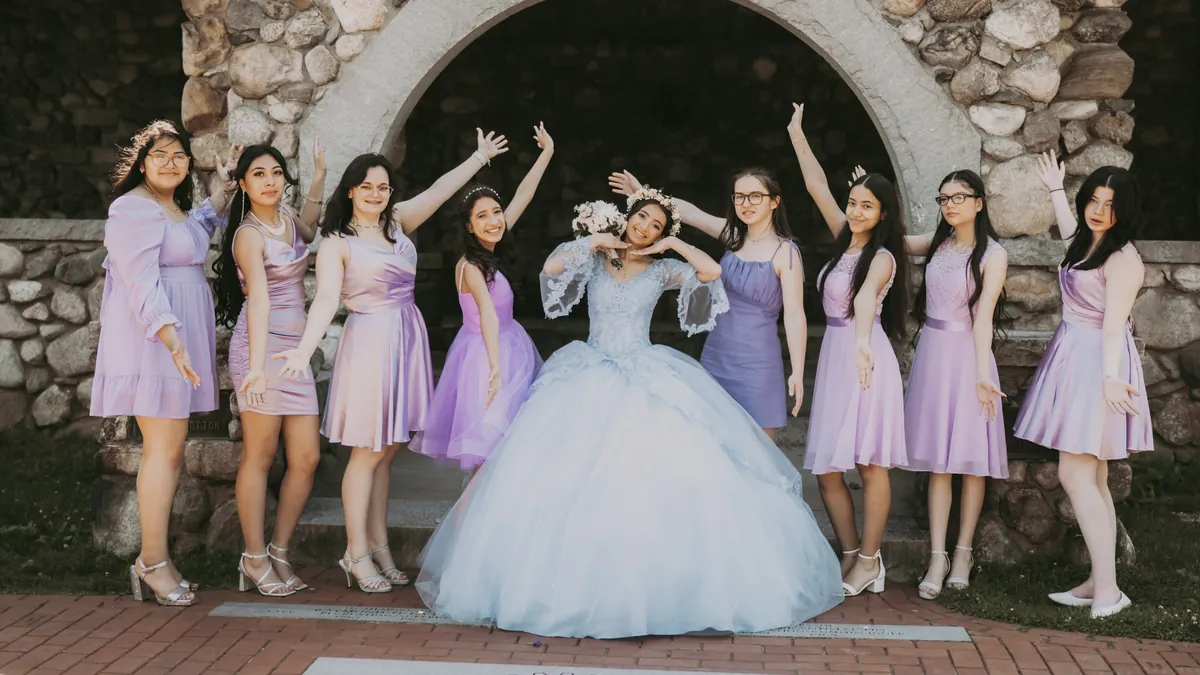
She walks in alone, with her dad or with her court, and that is the photo everyone is waiting for. The DJ and the photographer need to know where she enters from, to which song, and who goes first. The court—chambelanes (escorts) and damas (maids of honor)—is optional: if you have one, count in rehearsals and a conversation with their families about outfits.
The waltz
It usually runs as several turns back to back: it starts with her dad or whoever she chooses, and then her godfather, grandparents, uncles and brothers join in. Her chambelán comes last or in a turn of his own. It is the most rehearsed moment and the one that slips first, so put rehearsal dates in the calendar early. For the music, we have 26 waltz songs and how to choose them moment by moment.
The toast and the speeches
Someone in the family says a few words and everyone toasts. Keep it to two speakers at most, make sure they know when their turn comes, and have the glasses poured beforehand; a toast that runs long empties the dance floor faster than anything else.
The shoe change
She arrives in sneakers or flats and someone in the family—her dad, her mom or her godfather—swaps them for heels while she sits in front of the guests. The cambio de zapatillas is read as the step from girl to young woman, and at many parties it sits right next to the waltz, before or after. Two practical notes: have her rehearse sitting down in the actual dress, because the hem gets in the way more than you’d think, and pick a heel she can genuinely last in. Keep the sneakers within reach—they are usually back on her feet before midnight.
The cake and the candles
It is cut with the family around her and, if she likes, with the fifteen candles or fifteen dedications she gives to the people she chooses. Tell the photographer and the DJ: it is a short moment and it gets lost if nobody announces it.
The hora loca
This is the block that lifts the dance floor, with very upbeat music, performers and party favors. It works once the floor is already open and the energy starts to dip, not at the beginning. If you are hiring it in, our guide to how a hora loca is put together and what to ask the vendor applies just as well to a quinceañera; just plan the favors for every age, because at a quinceañera grandparents and small cousins share the same floor.
6 to 12 months before: date, budget and venue
- Pick the date. It doesn’t have to be her actual birthday; a nearby Saturday usually makes it easier for more people to come.
- Set the budget and decide who pays for what. Some families invite padrinos (sponsors) to take care of one piece—the cake, the music, the dress; if you’re going that route, ask them early.
- Close the guest range using the rules above, because the venue is booked with that number in hand.
- Book the venue and ask what’s included: furniture, hours, whether you must use their catering and how late the music can go.
- Hire the vendors who book up first: catering, photo and video, and the DJ.
- Book the Mass, if there will be one, so you aren’t choosing the party’s start time blind.
4 to 6 months before: the dress, the court and the theme
- The dress. If it’s made to order, fittings and alterations take several months. If she’ll change into a second dress for the party, include it in the budget.
- The theme and colors, so the decor, the cake and the invitation all go together.
- The court, if there will be one: choose the chambelanes and the damas, and agree with their families on outfits and rehearsals.
- The choreography. The waltz and the court’s dance need rehearsals; set a schedule now, because it’s the first thing to fall behind.
2 to 3 months before: invitation and gifts
- Send the invitation with the date, the venue, the dress code if there is one, and an RSVP deadline.
- Build the gift registry with her. At this age many girls would rather have one big gift—a phone, a laptop, a trip or a course—than lots of small ones. A registry built around those dreams avoids duplicate gifts and lets each guest give what they can.
- Finalize the menu and schedule the tasting.
- Order the cake, the appetizers and the party favors.
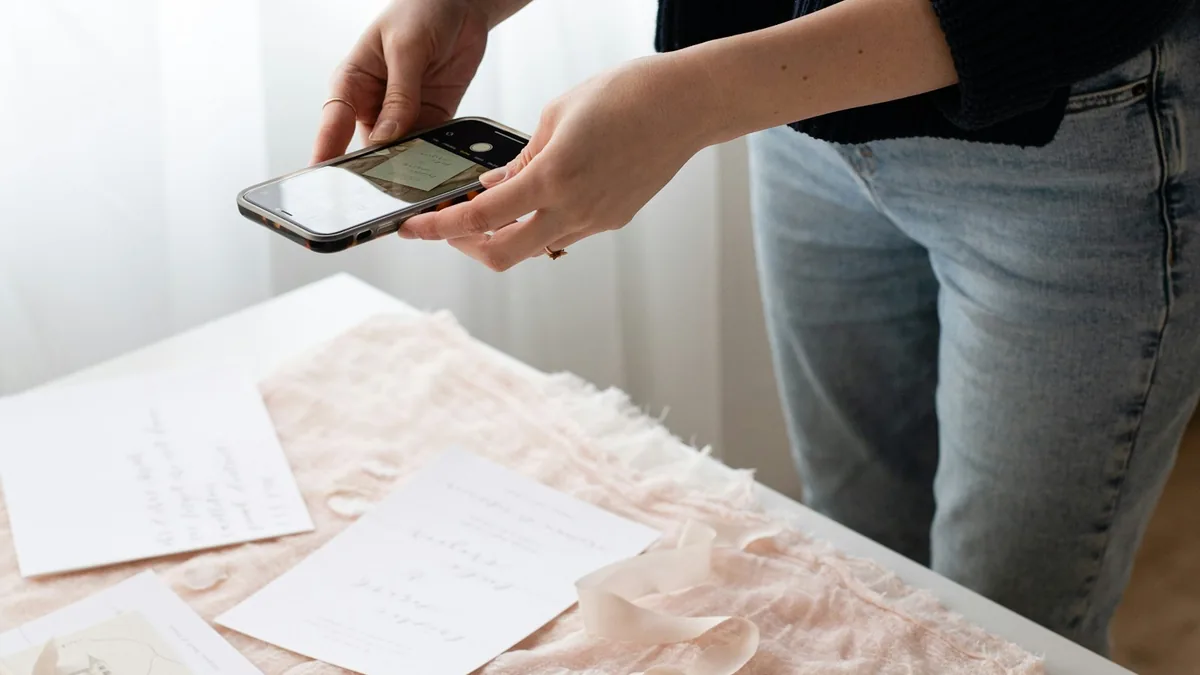
What the invitation cannot leave out, in this order: whose quinceañera it is, the date, the real start time, the address with a map link, the dress code if there is one, and the RSVP deadline. If there is a Mass, give it two separate lines—church and time, venue and time—because that is exactly where people miscalculate and miss one of the two. Send it on WhatsApp, which is where they’ll open it, with a personal message to each guest: a link forwarded to a group feels less like an invitation.
1 month before: the program for the day
Write out the program with times, even rough ones, and share it with the DJ, the photographer and the venue. A typical one looks like this:
- Guests arrive.
- Grand entrance of the quinceañera and her court.
- The waltz, starting with her dad or whoever she chooses, then with relatives and padrinos.
- The shoe change, right alongside the waltz.
- Toast and a few words from the family.
- Dinner.
- The court’s dance, then the dance floor opens.
- Cake, with the candles if there will be any.
- Hora loca and dancing until the end of the night.
Rearrange the order however you like: what matters is that everyone knows what comes next. Next to each item, write who announces it and who gives the cue—usually the DJ—because the moments nobody announces are the ones that don’t happen.
The last week
- Close the guest list based on the RSVPs and share it with the venue.
- Hold a final rehearsal of the waltz and the choreography, at the venue if possible.
- Have payments ready for the vendors who get paid on the day.
- Put someone you trust in charge of handling surprises, so you and the quinceañera can enjoy the party.
- Pack a day-of box: a printed program, vendor phone numbers, the shoes for the change, a sewing kit, batteries, and the payment envelopes labeled.
After the party
- Thank each guest, ideally with a message from her. It’s easier when you know who gave what.
- Share the photos with the family and friends who helped out.
Frequently asked questions
How far ahead should you start planning a quinceañera?
Six to twelve months is comfortable, and the first things you book are the date and the venue. If the dress is made to order or the court has choreography, those two need the most months. Three months is still enough for a lovely party, but you’ll be choosing from whatever is still free.
Are the waltz, the court and the hora loca mandatory?
No. They’re customs, not requirements: there are quinceañeras with a waltz and no court, with a court and no hora loca, and gatherings at home with none of the three. Keep the moments she wants and drop the rest—each one you add means rehearsals, outfits and budget.
How much does a quinceañera cost?
There’s no single figure that works for everyone, and any number given to you without knowing your headcount and your city is invented. What you can do is build the total backwards: set what the family can put in, split it into the blocks in this guide, and get three quotes per block. That gives you your figure, which is the only one that matters.
What do you give a quinceañera as a gift?
At fifteen, one big gift usually beats several small ones: a phone, a laptop, a trip, a course or a contribution to her savings. Ask her, and put it all on a single registry: guests appreciate being told what’s still missing, and you avoid three duplicate gifts.
How do you ask for money without it feeling awkward?
Give a reason and no figures. “She’s saving for her senior trip” or “for her first laptop” gives the contribution a purpose, and a registry where each guest gives what they like removes the pressure to compare. What doesn’t work is asking without saying what it’s for.
Invitation and gifts in one link
With parati for quinceañeras you build the invitation with the program, the venue and a countdown, and the gift registry lives on the same link. Creating, designing, publishing and sharing the celebration is free, with no plan and no subscription. If she’s dreaming of something big, create El Sueño (The Dream): you set the goal and the minimum contribution, and each guest gives whatever they like from their phone, by card or Yape, without signing up. Your dashboard also shows who has RSVP’d and who gave what, so nobody is left out of the thank-yous.