In this guide8 sections
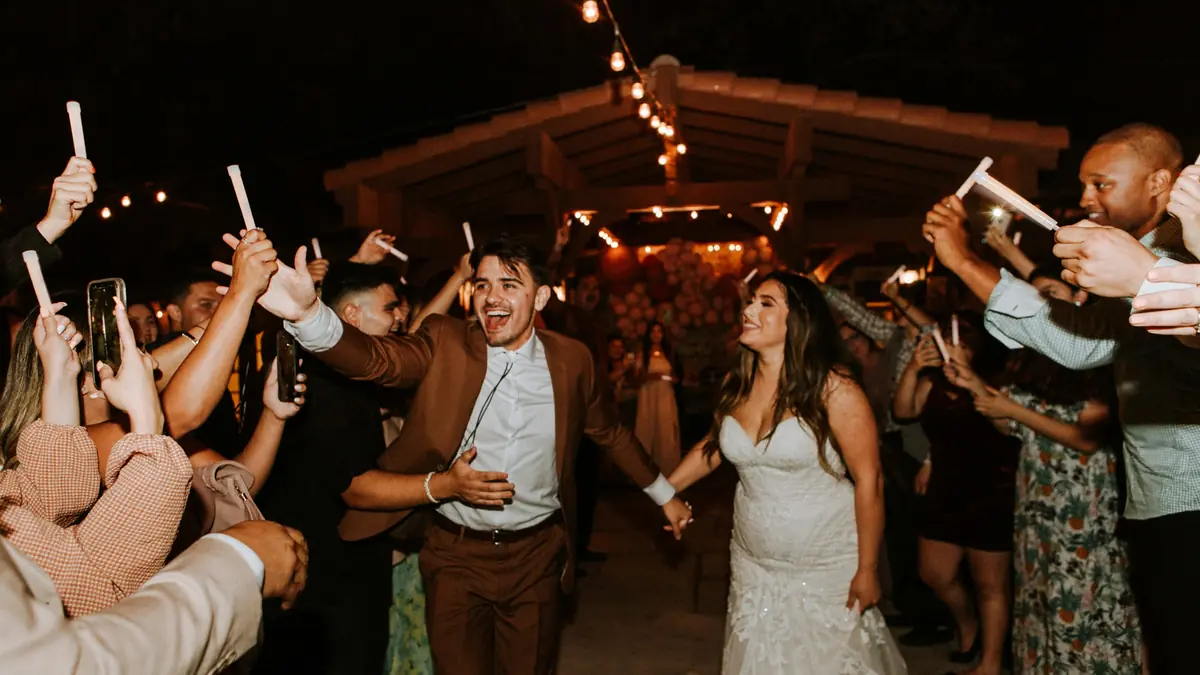
At almost every wedding party in Peru, there’s a moment when the music kicks up a notch, costumed characters burst onto the dance floor and suddenly everyone is wearing silly hats, colored sunglasses and glow necklaces. That’s the hora loca, literally the “crazy hour,” and when it’s done well, it’s the part of the night guests talk about afterward. Here’s what it involves, when to schedule it, ideas to make yours stand out, and what to ask before you hire someone.
What the hora loca is
The hora loca is a stretch of the reception designed to pump up the energy on the dance floor. It usually brings together three things:
- High-energy music, from the DJ or the band.
- Entertainers and characters: dancers, people in costume, stilt walkers or drummers who come onto the floor and pull guests in to dance.
- Cotillón: party favors and props—hats, masks, wigs, sunglasses, light-up necklaces and bracelets, rattles and whistles—handed out to the guests.
It’s a widespread party tradition in Peru and other Latin American countries, and it isn’t just for weddings: it’s a staple of quinceañeras and birthday parties too. There are different stories about where it started, so we’ll stick to the practical side. It sits alongside the rest of the Peruvian wedding customs, from the arras to the envelope shower.
If you’re a guest from abroad, don’t worry about the dance moves. The whole point is to join in and not take yourself too seriously.
When to schedule it
There’s no set time, but there is a logic to it: the hora loca works best when the dance floor is already open and the energy is starting to dip. A common running order looks like this:
- The couple’s entrance and a toast.
- First dance and the dance floor opens.
- Dinner.
- Dancing.
- Hora loca.
- More dancing, the cake and the send-off.
A few things to keep in mind:
- Don’t schedule it before dinner. Hungry guests run out of steam fast.
- Don’t leave it for the very end. If many guests have already left, it falls flat. Ask your parents and padrinos (wedding sponsors) when the older relatives are likely to head home.
- Loop in your photographer and videographer so they’re ready when the characters come in.
- Give the venue a heads-up, especially if there will be effects or performers who need room.
If you’re still putting together the full schedule, our month-by-month wedding timeline can help. At a quinceañera the slot is much the same: it comes after the court dance, once the quinceañera waltz songs have been danced.
Hora loca ideas
Pick a theme
A theme ties the props and costumes together and makes for better photos.
| Theme | What to bring |
|---|---|
| Carnival | Feathers, masks, bold colors and drums |
| The ’80s | Wigs, colored sunglasses, headbands and music from the decade |
| Neon | Glow bracelets, necklaces and glasses; works best with the lights down |
| Peruvian party | Hats, handkerchiefs, and cumbia, salsa and festejo (Afro-Peruvian music) on the playlist |
| Soccer | Jerseys, scarves, headbands and noisemakers |
| Beach | Leis, sunglasses and straw hats |
| Movie or TV show | Characters the couple loves |
Put the couple center stage
- A quick change: the couple shows up in sneakers, a bright jacket or matching costumes.
- A surprise entrance: the characters escort the couple onto the floor.
- A dance with friends: the groomsmen or bridesmaids rehearse a short routine.
- The first round of props is handed out by the couple, table by table.
Get every generation involved
- Hand out props in several rounds, not all at once, to keep the momentum going.
- Have props for kids that fit them and won’t break.
- Think about older guests: a table near the floor and a volume that lets them stay.
- Mix genres on the playlist so every group gets its song.
Hire it or do it yourself
| Hired | DIY | |
|---|---|---|
| What’s included | Performers, characters and sometimes props and effects | Whatever you buy and organize |
| Effort | Low: you coordinate the time and space | High: shopping, prep and someone to run it |
| Wow factor | High, thanks to the performers | Depends on your crowd |
| Control | The vendor sets the pace | You decide everything |
If you’d rather not be on top of either one on the night itself, that coordination is exactly what gets handed over: what a wedding planner does in Peru covers what each way of hiring one includes. The same logic—a loud block halfway through the night—works at an anniversary celebration, where the party spans three generations.
If you’re doing it yourself
- Buy props in bulk from party supply stores or markets and pack one bag per table.
- Put someone in charge who isn’t one of the two of you: someone to cue the DJ, bring out the bags and get people dancing.
- Plan the music with your DJ well ahead: the set, the order and the song that kicks it off.
- Recruit friends who are happy to dress up. Two or three characters are plenty.
How many props to buy
Work from your confirmed RSVPs, not your full guest list. Plan on at least one item per adult, add some extra for the ones that break or go missing, and count the kids separately. If you’re handing them out in rounds, divide the total so the last round isn’t empty.
What to ask before you hire
Before you pay, get all of this in writing:
- How long the show lasts and how many performers come.
- Which characters are included, and whether you can choose them to fit your theme.
- Whether props are included, and for how many guests.
- Whether they bring their own music or work with your DJ or band.
- What effects they use, and whether your venue allows them.
- When they arrive, where they change and how much space they need.
- What happens if the party runs late: whether they wait or charge for extra time.
- How much is due up front and what happens if you cancel.
- Videos from real events, not just promotional photos.
Also ask how they’ll coordinate with your other vendors: the band, the DJ and the photographer all need to know exactly when it starts.
Tips for a smooth hora loca
- Safety first. Clear space for stilt walkers and dancers, away from tables with candles or glassware.
- Nobody has to join in. Entertainers should invite guests, not drag them.
- Clean up the leftovers. Ask someone to gather props and wrappers before the night ends.
- Remember to enjoy it. It’s your party: delegate and dance.
The same idea works beyond weddings; see our adult birthday party ideas, or a bachelorette party with a night-out plan.
Questions that come up while planning it
Is the hora loca only for weddings?
No. It’s a staple of parties in Peru and other Latin American countries, and quinceañeras and birthdays get one too. The block works at any party with a dance floor: a stretch of high-energy music, costumed characters pulling guests onto the floor and props for everyone, dropped in right when the energy starts to dip.
How long does an hora loca last?
There’s no standard length: it depends on the package you book, and the name doesn’t commit anyone to a full hour. Before you pay, get it in writing—how long the show runs, how many performers come, which characters are included, whether props are included and for how many guests, and what happens if the party runs late.
Do we need to tell the venue?
Yes, and early. Stilt walkers, dancers and effects need room, and not every venue allows them: ask the vendor what effects they use and clear it with the venue before you sign. On the night, keep the floor clear and away from tables with candles or glassware, and give your photographer and videographer a heads-up so they’re ready.
What if a guest doesn’t want to dress up?
Nothing: nobody has to join in. Entertainers should invite people, not drag them onto the floor, and it’s worth saying so to the vendor in advance. To bring the hesitant ones along anyway, hand out the props in several rounds instead of all at once, and mix genres on the playlist so every group gets its song.
Know who’s coming before the party
To know how many prop bags to pack, you first need to know how many guests are coming. With parati, your invitation and gift registry live on one link that you share on WhatsApp.
- You see who RSVP’d and who gave what.
- Guests RSVP and give gifts from their phone, without creating an account, by card or Yape (Peru’s popular mobile wallet).
- Gifts in parts: a big gift can be split so several guests share it.
- El Sueño (The Dream): one big gift, with the goal and the minimum contribution you set.